Support +254 734 916745

Linda Mwananchi’s Parallel Delegates’ Conference at Ufungamano Revives the Politics of Agitation

By Lee Kamutu
As Kenyans rushed to work on the morning of March 27, television cameras were fixed on two venues barely 10 kilometers apart within Nairobi, each teeming with political activity. Both were hosting parallel delegates’ conferences of the Orange Democratic Movement (ODM), in a dramatic schism now unfolding in full public view.
On one end, the Oburu Odinga-led “Linda Ground” faction convened in relative calm, with the ratification of contentious leadership changes topping the agenda. On the other end, within the precincts of Ufungamano House, the rival “Linda Mwananchi” faction found itself in a tense cat-and-mouse game with law enforcement. Kenyan TV screens split in real time, offering a symbolic contrast that observers could not ignore.
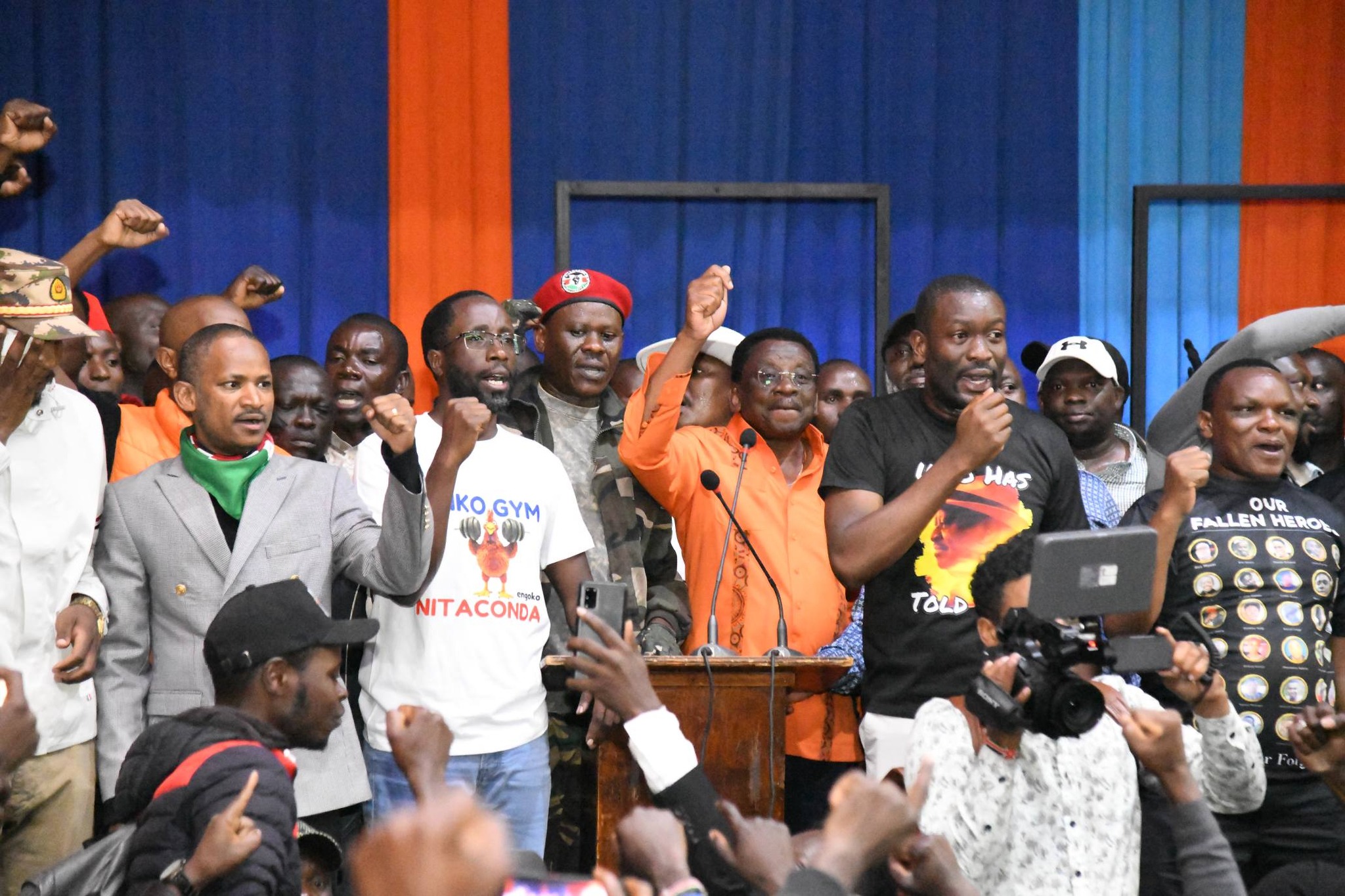
While the Oburu-led ASK Dome event proceeded uninterrupted, images emerged of embattled ODM Secretary General Edwin Sifuna alongside Babu Owino and Siaya Governor James Orengo physically holding off police officers attempting to disrupt their gathering. The moment felt less like an internal party dispute and more like a throwback to Kenya’s long tradition of resistance politics.
Indeed, the Ufungamano event carried all the hallmarks of political agitation once perfected by the late Raila Amollo Odinga, with defiance, symbolism, and appeals to the moral authority of “the people.” The venue itself amplified that message. In Kenyan civic circles, Ufungamano House is not just a building; it is a hallowed ground of reforms, a site layered with memory, most notably the Ufungamano Initiative, which offered a grassroots alternative to state-driven constitutional processes in the early 2000s.
It is this symbolism that the Linda Mwananchi faction appears keen to reclaim. Alluding to the weight of the moment, Senior Counsel Orengo said, “that same spirit has returned,” as delegates gathered at Ufungamano House for what they called the ODM People’s National Delegates’ Convention. Inside the hall, chants of “Jowi! Jowi!” rang out, invoking the towering legacy of Raila Odinga, who once stood in the same venue rallying Kenyans around political freedom and social justice.
Orengo went further, framing the battle as one of legitimacy rather than procedure. According to him, the true soul of ODM resided not at the ASK Dome, where delegates ratified leadership changes including the elevation of Oburu Odinga as party leader, but within Ufungamano’s walls, where dissent still breathes.
That framing is proving to be politically potent. The Linda Mwananchi formation has sustained a steady campaign of defiance, projecting itself as the custodian of grassroots legitimacy even as questions linger about its suspected backers. Its posture of rebellion, coupled with a strain of populism, has resonated with segments of the public weary of political compromise.
Their continued resistance to the party old guard has significantly boosted their street credentials as “true fighters,” attracting admiration even from unlikely quarters. Kalonzo Musyoka has praised Orengo’s agitation, while former Deputy President Rigathi Gachagua has openly lauded Sifuna and Owino as visionary leaders, even offering them a political fallback should they be expelled from ODM.
By choosing Ufungamano, the ODM rebels tapped into political tradition. Political popularity in Kenya has often been forged in spaces of resistance, not in air-conditioned boardrooms and elite auditoriums. And for now, that symbolism is working.
The writer is an Associate Publisher at Free Press Publishers.