Support +254 734 916745


Ex-EACC chair Philip Kinisu’s book rekindles integrity conversation in Kenya’s financial sector

By Lee Kamutu
Rarely in Kenya does a single book inspire hope in an entire profession. Yet that is precisely what veteran accountant Philip Kinisu’s biography, The Interrupted Accountant, has done among his colleagues.
The book has ignited discourse on integrity, accountability, and the difficult moral choices facing professionals in Kenya’s public and private sectors. It is increasingly being embraced as a cautionary reflection on power, governance, and the hidden political costs of confronting corruption in Kenya.
The book traces Kinisu’s extraordinary rise from humble beginnings in Webuye, Western Kenya, to the pinnacle of the accounting profession in Africa and beyond. Over a career spanning more than three decades, he occupied some of the most influential positions in East Africa’s financial and corporate landscape. Kinisu worked at global audit giant PricewaterhouseCoopers, eventually serving as Territory Senior Partner at PwC, where he became widely respected for expanding audit and advisory services into previously underexplored sectors, including government institutions, NGOs, public infrastructure, and donor-funded development programs.
Among the standout highlights revisited in the book is his role in auditing estates connected to the British Royal Family during the reign of Queen Elizabeth II, an assignment that symbolised the level of trust and credibility he had earned internationally.
For many Kenyans, however, it is not his corporate accomplishments alone that have made the book resonate so deeply. It is his turbulent and short-lived tenure at the Ethics and Anti-Corruption Commission (EACC) that has captured public imagination.
Kinisu’s appointment as chairman of the EACC in January 2016 was widely viewed as the entry of a seasoned technocrat into one of Kenya’s most politically sensitive institutions. Like the chairmanship of the electoral commission, leadership at the EACC sits at the intersection of political power, state interests, and elite commercial networks.
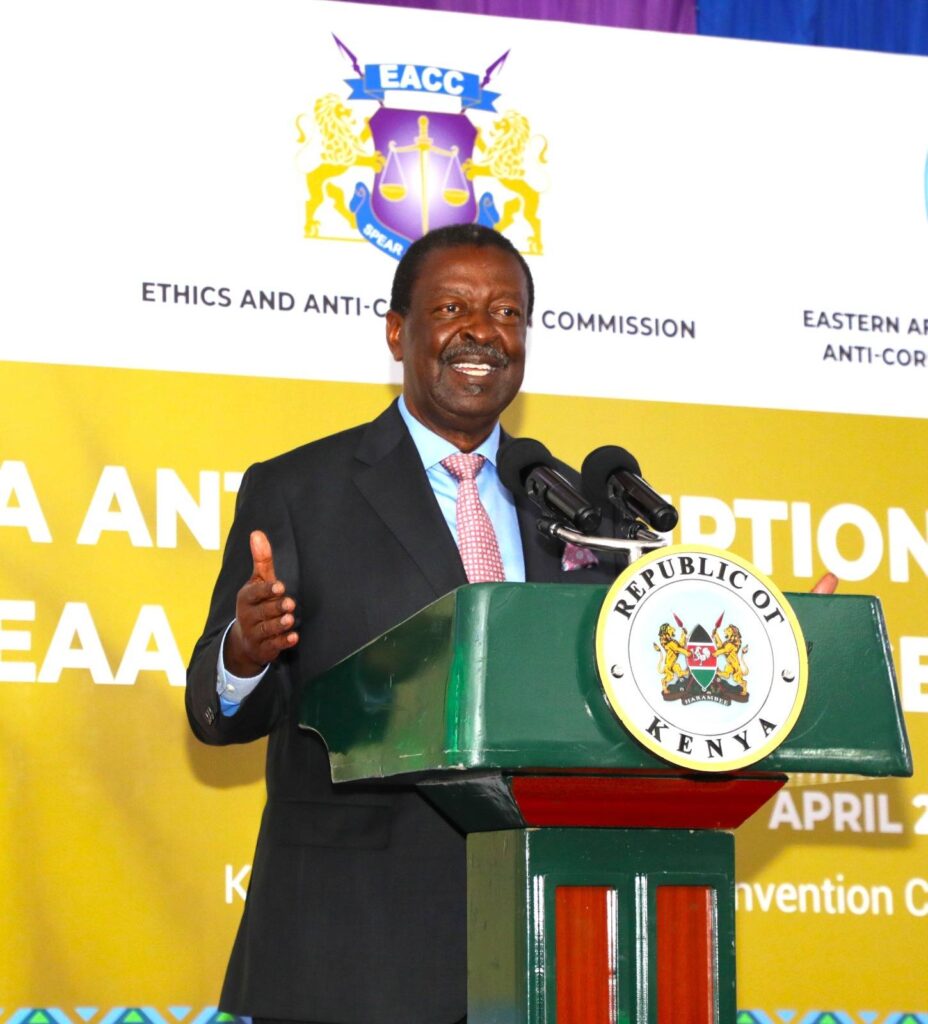
Kinisu’s aggressive EACC reform agenda, however, quickly triggered fierce resistance. He faced assassination attempts and a coordinated smear campaign, forcing him to resign after only eight months in office. The book revisits this painful chapter candidly, detailing how anti-corruption institutions themselves can become arenas of political warfare.
Among finance and governance professionals, that chapter has become one of the book’s most discussed sections. Dr James McFie, a senior lecturer at Strathmore University Business School, condemns the treatment Kinisu received at EACC, warning professionals about the increasing use of media-driven smear campaigns in public life. His observations have triggered a wider debate on whether institutions such as the EACC and the Kenya Revenue Authority have become vulnerable to state patronage and coercion.
Professor Elizabeth Kalunda Muvui, chairperson of the Institute of Certified Public Accountants of Kenya (ICPAK), has said, “This is not just any book; it’s a strong reminder that accountability is about more than numbers. It’s about the legacy we choose to build.”
Prof. Muvui describes the text as a celebration of professional courage, especially for accountants who often face enormous pressure when handling sensitive financial matters. She also laments the perception that public sector accountants abet corruption despite, in reality, being the first line of defenders against the vice. “We must refuse to compromise professional standards regardless of political or commercial pressure.”
Isaac Awuondo, chairman of NCBA Group, praises Kinisu’s meticulous documentation of Kenyan professional history and heritage. He commends Kinisu’s academic discipline and his decision to pursue advanced studies and professional work in England, a path that inspired many Kenyan accountants of his generation.
Governance scholar, Professor Karuti Kanyinga from the University of Nairobi, holds the book as proof of how accountants can shape national institutions beyond the finance sector.
Prof. Kanyinga lauds the book for combining technical excellence with deeply personal reflections, making Kinisu’s journey relatable even to readers outside finance.
Perhaps the most emotionally striking reactions to the book have centred on the dangers faced by professionals who enter public service. Robert Mbugua, Independent Non-Executive Director at Standard Chartered Bank Kenya, described the autobiography as both inspiring and sobering.
While praising the book’s demonstration of how discipline can transform lives, hence its inspiring hope for young Kenyans from disadvantaged backgrounds, he highlighted the burgeoning fear among highly qualified professionals of being publicly humiliated or politically targeted after accepting public appointments.
In one of the book’s most pointed and widely discussed reactions, Mbugua disclosed that he had recently declined consideration for a public chairmanship position to avoid political exposure.
Apparently, such concern is widely shared among Kenya’s technocratic cadre, with the potential to discourage its most competent professionals from public service.
For Mbugua, Kenya’s ambitions of becoming a globally competitive economy like Singapore (one of the four Asian Tigers) cannot succeed without meritocracy. He argues that the country must consistently field its “starting eleven,” its best minds across public institutions.
What began as the life story of a distinguished accountant is now a national reflection on governance, institutional weakness, political patronage, and the personal cost of integrity.
At a time when Kenya continues to grapple with public debt, procurement scandals and declining trust in institutions, The Interrupted Accountant has found relevance far beyond boardrooms and audit committees.
The jury is out as to whether Kenya can build institutions strong enough to protect honest professionals rather than punish them. And in that sense, Kinisu’s masterful narration of his journey may have opened one of the most important conversations Kenya’s professional class has had in years.
The writer is an Associate Publisher at Free Press Publishers.