Support +254 734 916745

What Patrick Analo’s Arrest in Syokimau Says About Public Integrity

By Jane Odeny
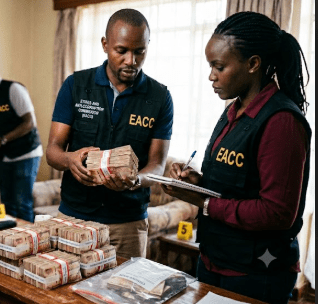
The recent recovery of KSh 65.3 million in cash from the Syokimau residence of Patrick Analo Akivaga, Nairobi County’s Chief Officer for Urban Development and Planning, has once again thrust the issue of public accountability into the national spotlight. According to the Ethics and Anti-Corruption Commission (EACC), investigators recovered KSh 51.3 million in cash, an additional USD 113,000, and various documents and electronic devices believed to be relevant to ongoing investigations into alleged corruption, abuse of office, bribery, and possession of unexplained wealth.
While investigations remain ongoing and the suspect is entitled to the presumption of innocence, this incident has reignited an important national conversation about integrity in public service, stewardship of public resources, and the standards expected of those entrusted with positions of authority.
Chapter Six of the Constitution of Kenya on Leadership and Integrity provides that authority assigned to State and public officers is a public trust to be exercised in a manner that promotes public confidence. Public officials are, therefore, expected to uphold the integrity of the offices and serve the people rather than personal interests. When allegations of unexplained wealth emerge, the consequences extend far beyond the individuals involved. Such cases erode confidence in public institutions and reinforce perceptions that corruption remains one of the greatest obstacles to effective governance.
The significance of the Syokimau case is amplified by the office involved. Urban planning and development directly influence the daily lives of millions of Kenyans. Decisions concerning land use, building approvals, infrastructure development, and the management of public spaces shape cities, communities, and economic opportunities.
In Nairobi, these responsibilities carry even more weight. The city has witnessed numerous cases of illegal and unprocedural construction that have led to devastating building collapses and the loss of lives. Time and again, investigations have pointed to corruption, bribery, and regulatory failures within approval systems as contributing factors.
When questions arise about the integrity of officials occupying key planning offices, public concern is therefore both understandable and justified.
This reflection finds a compelling parallel in The Interrupted Accountant, the memoir by distinguished Kenyan accountant Philip Kinisu. Mr. Kinisu has written extensively about the complex relationship between integrity, public scrutiny, integrity, and personal responsibility. While urging professionalism among public officials, Kinisu calls for a moral reset among Kenyan citizenry towards the total eradication of corruption.
Raids, arrests, asset recoveries, and prosecutions are important tools in the fight against graft, but they often address the symptoms rather than the root causes. Sustainable progress requires stronger institutional safeguards, transparent procurement systems, robust internal controls, meaningful public participation, and a culture that rewards integrity rather than shortcuts.
True accountability does not really come out in the dramatic recovery of cash or the spectacle of high-profile investigations, but in the assurance that public office remains a public trust. That trust, once broken, is difficult to restore. Protecting it must remain a high priority of any society committed to integrity, justice, and good governance.
The writer is a research assistant at Free Press Publishers.