Support +254 734 916745

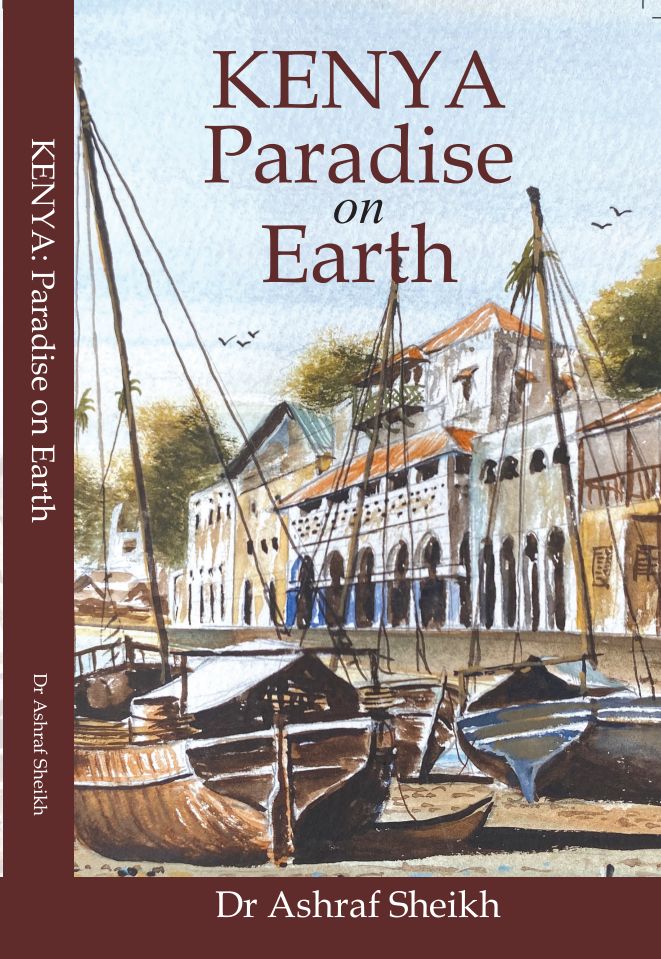
Silenced Voices, Enduring Influence: Women in “Kenya: Paradise on Earth” by Dr. Ashraf Sheikh

By Lucy Atieno
Dr. Ashraf Sheikh’s memoir Kenya: Paradise on Earth is a rich recollection of family history, migration, enterprise, and colonial and postcolonial Kenya. While much of the memoir recounts business, politics, community life, and the making of a family across continents, one of its most compelling narratives lies in the unacknowledged influence of women. Sheikh reveals that although women were rarely visible in formal leadership or public decision-making, they exercised profound authority within the family, shaping its values, preserving its unity, and influencing its economic future.
The memoir notes that history is not only made in boardrooms, government offices, or public institutions. It is equally shaped in homes, where women quietly negotiate conflicts, guide families through uncertainty, and make decisions whose consequences ripple across generations. Sheikh’s recollections challenge conventional understandings of power by demonstrating that influence does not always require public recognition.
Perhaps the strongest example from the memoir is Sheikh’s mother, Fazal Noor, whose contribution to the family’s garment business extended far beyond the domestic sphere. Although she occupied no official executive position, she participated in managing the family’s garment enterprise in the United States and later persuaded her children to establish a branch of the business in Lahore, Pakistan—the family’s beloved ancestral home. Her vision demonstrates that strategic thinking and commercial acumen were not the exclusive preserve of men, even if social conventions denied women formal acknowledgement.
Fazal Noor’s greatest strength is revealed not only through business but through character. Following the death of her father, she was disinherited by her brothers despite being his only daughter. Possessing legal grounds to challenge the injustice through her son, who held her power of attorney, she instead instructed him not to pursue legal action against his uncles. Her decision was neither weakness nor resignation. It was a conscious choice to preserve family peace above material inheritance. Sheikh presents this episode as a good example of moral leadership, a form of authority grounded in wisdom, restraint, and reconciliation rather than confrontation.
The legacy of maternal influence did not end with one generation. It continued through Sheikh’s sister, Shamim, whose entrepreneurial spirit transformed women’s opportunities in Kenya. Inspired by the values of industry and service inherited from her mother, Shamim founded Shamim Secretarial College for Women in Tudor, Mombasa becoming a pioneer in women’s vocational education during the 1970s. As one of the first institutions of its kind in Kenya, the college equipped countless women with practical skills that enabled economic independence and professional advancement.
These family histories deepen the memoir’s broader reflections on gender. Throughout Kenya: Paradise on Earth, women frequently occupy the background of public events, their identities often framed as mothers, wives, daughters, or sisters rather than as independent actors. Sheikh’s recollections, however, reveal that beneath these socially prescribed roles lay extraordinary resilience, intelligence, and foresight. The memoir suggests that patriarchal societies often confuse visibility with importance. Women may have been absent from official leadership, but they remained central to the survival, prosperity, and moral direction of their families.
Importantly, Kenya: Paradise on Earth also prompts reflection on the writing of history itself. Traditional historical narratives tend to celebrate political leaders, businessmen, and public figures while overlooking the women whose influence unfolded in obscurity. Sheikh’s memoir gently corrects this imbalance by preserving the stories of women like Fazal Noor and Shamim, ensuring that their contributions become part of the historical record rather than remaining confined to family memory.
In celebrating these quiet architects of family and society, Dr. Ashraf Sheikh restores the voices of women whose strength helped build families, businesses, communities, and ultimately the nation itself.
Click here to buy a copy of KENYA: Paradise on Earth by Dr. Ashraf Sheikh.
Lucy is a research assistant at Free Press Publishers.