Support +254 734 916745

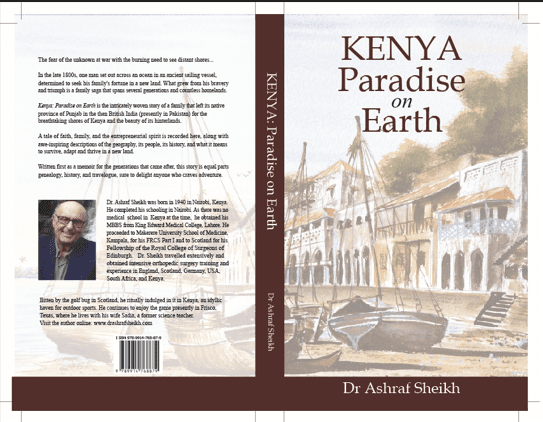
KENYA: Paradise on Earth Book Review: Dr. Ashraf Sheikh on Migration, Resilience and Belonging

By Nyatichi Verity
The title KENYA: Paradise on Earth immediately evokes familiar images of Kenya: majestic wildlife roaming across endless savannahs, pristine beaches stretching along the Indian Ocean, fertile landscapes, diverse ecosystems, and the warmth of its people. For many visitors, these are the lingering first impressions of a country blessed by nature and rich in cultural heritage.
However, Dr. Ashraf Sheikh’s memoir gently dismantles this comforting illusion that paradise is effortless. Within Kenya’s breathtaking beauty is the reality that living in paradise is profoundly different from merely admiring it.
Dr. Sheikh’s memoir reminds readers that while nature generously endowed Kenya with extraordinary beauty and abundance, building a life within it required determination, sacrifice, and resilience, especially for migrants arriving during the pre and colonial era. The Kenya encountered by the Sheikh family was not a welcoming destination of opportunity. It was a society structured by rigid racial segregation, nascent systems, and institutional barriers that tested the resolve of every newcomer seeking to belong.
Migration, therefore, emerges not simply as a geographical journey but as an act of extraordinary courage. Leaving Punjab for a wild East Africa meant abandoning familiarity and security for hope. The family’s decision to begin anew reflects a universal truth shared by migrants across generations: every promise of a better future carries hidden costs that only become visible after arrival.
Dr. Sheikh refuses to romanticize either migration or success. Kenya’s beauty did not automatically translate into prosperity. His family’s success demanded sustained investment, difficult choices, and gradual integration into communities already shaped by complex histories and later colonial divisions.
Businesses experience setbacks, most notably the loss of goods at sea during the early days of the family’s newly established export-import business in Mombasa. However, reader get to see how each disappointment becomes an invitation to rebuild rather than surrender. The family’s response illustrates that resilience is not measured by the absence of hardship but by the capacity to begin again with renewed purpose.
A vital source of this endurance is faith. Dr. Sheikh’s family’s deeply rooted Islamic belief provided both moral direction and emotional strength during periods of uncertainty. Prayer, trust in Allah, and steadfast devotion become anchors that enabled the family to confront adversity without losing hope.
For young readers, entrepreneurs, and aspiring migrants, this text carries profound lessons. In an era when success is often portrayed as immediate and uncomplicated, KENYA: Paradise on Earth reminds us that meaningful achievement is rarely instantaneous. Every worthwhile journey involves obstacles that test conviction before revealing opportunity.
Dr. Ashraf Sheikh has offered a thoughtful reflection on migration, identity, belonging, and the spirit required to transform unfamiliar ground into home. Its key message is that paradise is not defined solely by beautiful landscapes or abundant resources. It is realised through perseverance, community, faith, and the courage to build a meaningful life in the face of adversity.
Click here to buy a copy of KENYA: Paradise on Earth by Dr. Ashraf Sheikh.
The writer is a researcher at Free Press Publishers.