Support +254 734 916745

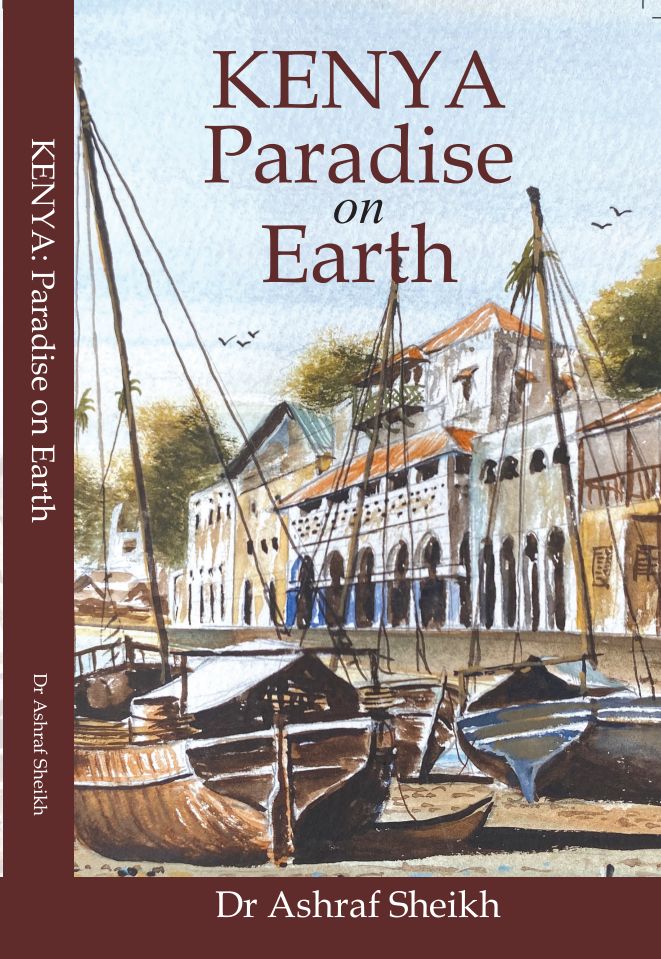
KENYA: Paradise on Earth – Faith, Fortune, and Long Pilgrimages to Mecca

By Risper Atieno
In the memoir KENYA: Paradise on Earth, religion emerges as a powerful force shaping identity, decision-making, and family continuity. While the memoir explores migration, entrepreneurship, and family dynamics, it is Islamic faith that provides the moral and emotional foundation upon which these experiences are built. For the Sheikh Nurdin family, religion is not a background detail but a lived reality that informs how they interpret success, hardship, and purpose.
At the centre of this religious worldview is a deep commitment to Islam, expressed through prayer, discipline, and reliance on Allah in both moments of prosperity and crisis. From the earliest generations, beginning with Sheikh Nurdin and continuing through Fazal Ilahi and later descendants, daily life is closely tied to religious observance.
One of the most striking expressions of this faith is the practice of pilgrimage, particularly journeys to Mecca. The memoir presents Sheikh Nurdin’s pilgrimages as deeply personal spiritual milestones rather than routine religious obligations. These journeys are marked not only by devotion but also by physical, emotional, and logistical challenges. In an era when travel was long, uncertain, and often dangerous, leaving the family behind for extended periods required immense sacrifice. Yet these pilgrimages are portrayed as essential moments of spiritual renewal, reflection, and reorientation.
The book also highlights how faith becomes a source of resilience during times of crisis. When business ventures fail or misfortune strikes, as in the loss of Sheikh Nurdin’s wares at sea, religion provides a basis for endurance rather than despair. Turning to Mecca or intensifying devotion were a way of seeking clarity, strength, and restoration in the face of uncertainty.
Importantly, the memoir shows that religious belief is closely tied to generosity and community responsibility. Success is not viewed as purely individual achievement but as a blessing that carries social obligations. As fortunes improve, members of the family are shown giving back through acts of charity, support for community institutions, and contributions to social welfare. Wealth is therefore framed as trust rather than ownership, something to be shared in accordance with religious duty and moral expectation.
In conclusion, KENYA: Paradise on Earth presents religion not as abstract doctrine but as lived practice woven into migration, pilgrimage, family life, and enterprise. For Kenyan readers especially, it offers a moving reflection on how faith travels, adapts, and endures, shaping not only spiritual journeys to Mecca, but also the everyday journeys of survival, success, and belonging in East Africa.
The writer is a research assistant at Free Press Publishers.