Support +254 734 916745

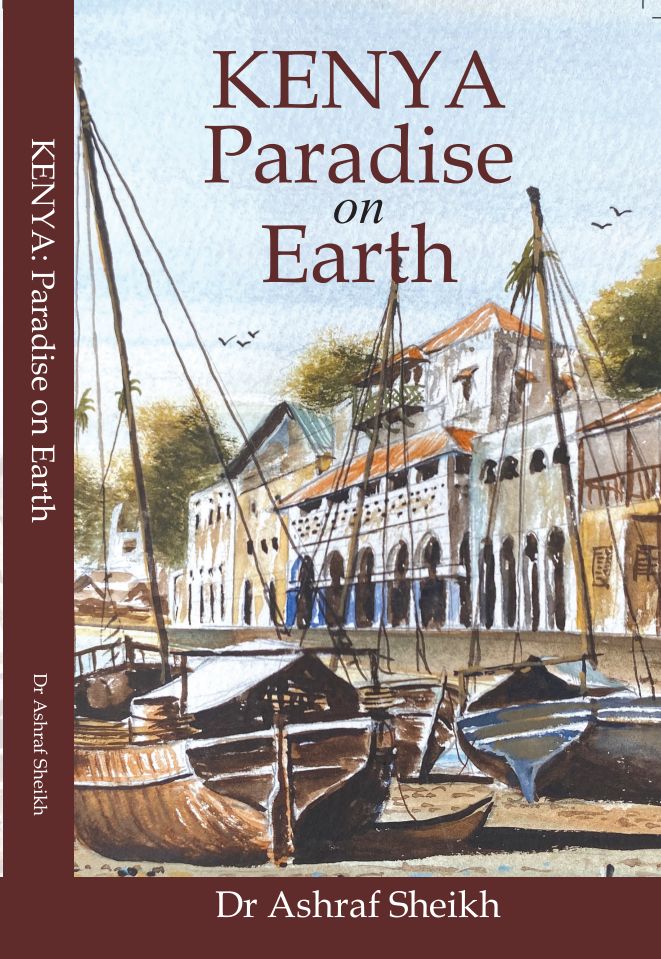
KENYA: Paradise on Earth: Inside Kenyan-Asian Families’ Unity, Conflict, and Legacy

By Jane Odeny
While many Kenyans are familiar with the everyday realities of native Kenyan families, often reflected in television dramas, public discourse, and popular culture, the inner workings of Kenyan-Asian households remain far less visible. Often perceived from the outside as tightly knit, disciplined, and economically successful communities living behind imposing walls in major Kenyan cities, their private family life has largely remained a mystery.
In KENYA: Paradise on Earth, Dr. Ashraf Sheikh lifts this veil, offering a rare glimpse into the complexities, tensions, and transformations within a multigenerational Kenyan-Asian family.
The gripping memoir presents the family as both a source of strength and a site of deep internal struggle. On the surface, unity and collective effort appear to define the Sheikh Nurdin family’s early success. Migrating from Punjab to Kenya, family members rely on one another for survival, economic stability, and social adaptation. Older generations provide guidance, while younger members pursue education and economic opportunity. In this structure, the family operates as both emotional anchor and economic institution, reflecting the broader experience of immigrant communities in Kenya.
However, beneath this image of cohesion lies a more complex reality. As the family expands across generations and wealth accumulates, internal divisions begin to surface. One of the most significant fault lines emerges from issues of succession, inheritance, and polygamous family structures within a Muslim household context. What begins as a unified legacy gradually fractures under competing interests, emotional rivalries, and disagreements over control of resources.
Step-sibling relationships become increasingly strained, with disagreements escalating into open conflict. The memoir reflects how familial bonds, when tested by wealth and expansion, can shift from cooperation to confrontation. In some instances, these tensions escalate into legal battles, public disputes, and even imprisonment of certain family members, revealing how deeply personal disagreements can spill into formal institutions of justice.
The fragmentation of the family is further symbolised by physical separation. At one point, the family head, Fazal Ilahi, withdraws from the central household to live separately with one of his wives from Syria, whom he met during pilgrimage travels to the Middle East. This separation marks not only a personal decision but also a broader breakdown of shared domestic unity. Over time, siblings and branches of the family pursue independent lives, with some relocating abroad to countries such as Britain in search of autonomy, stability, or escape from internal conflict.
Yet even in fragmentation, the memoir suggests that family remains a defining force. Cultural identity, shared history, and inherited values continue to bind individuals together, even when physical or emotional distance grows. The family becomes both a source of belonging and a site of unresolved tension, a duality that reflects the lived reality of many large, transnational families.
Ultimately, KENYA: Paradise on Earth challenges the romanticised notion of the “harmonious extended family” by revealing its internal contradictions. It shows that Kenyan-Asian families, like all families, are shaped not only by unity and success but also by conflict, ambition, and emotional complexity. In doing so, the memoir offers a rare and valuable insight into a private world that is often assumed but rarely understood. A world where love, loyalty, and rivalry coexist in fragile balance.
The writer is a research assistant at Free Press Publishers.