Support +254 734 916745

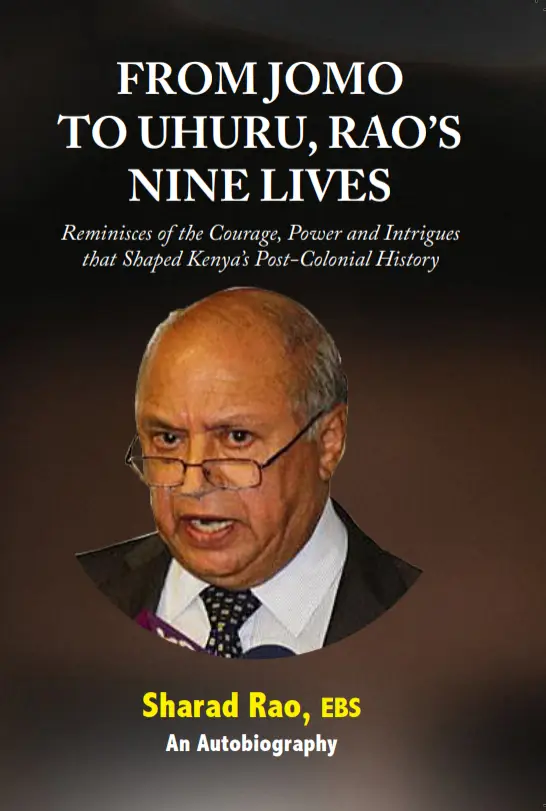
Sharad Rao Celebrates the Unsung Kenyan-Asian Independence Architects in Autobiography

By Risper Atieno
While mainstream historical narratives heavily attribute the triumph of Kenya’s Uhuru (independence) to the Mau Mau armed struggle, the popular movement was flanked by a parallel wave of resistance from other communities. In his autobiography, From Jomo to Uhuru: Rao’s Nine Lives, prominent jurist Sharad Rao highlights the methodical, high-stakes contributions of the Kenyan-Asian community in dismantling British colonial rule.
Born in 1935 to Indian immigrant parents, Rao lived through the height of the Mau Mau tensions. His book serves as an intimate lens into a community whose loyalty was frequently viewed with suspicion by the colonial and post-colonial governments, yet its members actively anchored the battles for Kenya’s freedom.
The Nehru Mandate: Organizing the Resistance
The methodical involvement of the Asian community gained significant momentum in 1948, catalyzed by an international diplomatic push. India’s first Prime Minister, Pandit Jawaharlal Nehru, dispatched Appasaheb Pant to Nairobi as the Commissioner General for India for East and Central Africa. Nehru’s instructions to Pant were to sensitize, organize, and support Kenyans in their sovereign struggle for independence. This diplomatic anchor emboldened the local Asian population to openly align with the African liberation cause.
From the Streets to the Trade Unions
At the height of the struggle, Kenyan-Asians became extremely active across political parties and labor movements. Rao highlights the bold defiance of figureheads like Makhan Singh, a fiery trade unionist who delivered passionate public speeches demanding immediate, unconditional independence for Kenya. Meanwhile, others like Pio Gama Pinto, originally from Goa, India, directly embedded themselves within the radical wing of the liberation movement, providing critical logistical and strategic support to the Mau Mau struggle.
Courtroom Battles: Defending the Kapenguria Six
Perhaps the most enduring contribution documented in the struggle’s legal front was the high-powered battery of Asian lawyers who stepped forward when African leaders were completely disenfranchised by the colonial justice system. When the colonial government arrested the “Kapenguria Six,” including Jomo Kenyatta, in an attempt to crush the political leadership of the independence movement, they were met with a formidable legal defense team.
Lawyers of Asian origin, including Achroo Kapila, Fitz DeSouza, and Jaswant Singh, put their careers and personal safety on the line to defend the African nationalists. They fought in colonial courtrooms against summary convictions and forcefully turned them into spaces for human rights and political dignity.
Sharad Rao Challenges Post-Independence Exclusion
A central, quiet thread running through significant portions of Rao’s memoir is a tactful challenge to how history was written after 1963. Despite their immense sacrifices, the Kenyan-Asian community found themselves increasingly marginalized and politically excluded in the post-colonial era, their contributions quietly scrubbed from popular textbook histories.
By documenting these events, Rao does not seek to diminish the sacrifice of the frontline freedom fighters. He seems to be fostering a deeper, more accurate appreciation of how cross-communal solidarity actually built the nation.
The book demonstrates that Kenya’s independence was won not just in the forests of the Aberdares, but through a unified front of diverse minds, legal intellects, and shared revolutionary courage.
Risper is a research assistant at Free Press Publishers.