Support +254 734 916745

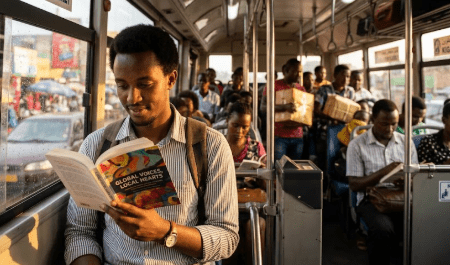
Why Good Conversations Are Becoming Rare and How Reading Can Change That

By Dorris Munguti
A strange frustration has been creeping up in public conversations today: people are increasingly getting tired of uninformed opinions.
Across social media, memes and jokes mock people who confidently speaks on issues they barely understand. While some target ‘boyfriends’ who cannot explain major global events unfolding in our time, others criticize public commentators who make sweeping claims about complex national issues without demonstrating a deeper understanding of the facts. From debates about rising fuel prices to political decisions and international conflicts, the Kenyan public has grown weary of commentary that is loud but shallow.
Meaningful conversations require curiosity, knowledge, and the ability to consider perspectives beyond our own experiences. These qualities, however, do not develop by accident. They are cultivated through learning, and one of the most powerful ways to learn is through reading.
Books remain one of humanity’s greatest tools for expanding understanding. They allow us to enter worlds we have never experienced, learn from people we will never meet, and explore ideas that challenge our assumptions. A person who reads widely carries a deeper reservoir of knowledge, stories, and perspectives into every conversation.
Reading does not simply make someone more informed; it makes them more interesting. It gives people something valuable to contribute at the dinner table, in the workplace, in friendships, and in public discussions. It transforms conversations from exchanges of recycled opinions into opportunities for discovery.
Professionally, people who read widely often contribute more meaningfully in meetings, interviews,
and networking events. Leaders who read biographies and history gain practical lessons about
decision-making, resilience, and communication. Entrepreneurs discover new ways of solving
problems. Students develop stronger analytical skills and become more confident when presenting
ideas. Reading therefore becomes an investment not only in knowledge but also in effective
communication
Extensive reading also improves listening and critical thinking. Books encourage patience and reflection,
unlike the fast-moving nature of short-form online content. Readers learn to evaluate evidence, recognize
different viewpoints and ask better questions. These skills naturally carry into conversations,
making discussions more balanced, respectful, and productive.
We should, therefore, launch quests to find and read good books. Good books shape character, expand imagination, and provide ideas worth sharing. For anyone seeking stronger relationships, richer discussions, and a broader understanding of the world, the habit of reading is one of the greatest investments they can make. When we choose good books, we gain knowledge, wisdom, and perspectives that enrich every conversation we engage in.
The writer is a research assistant at Free Press Publishers.